
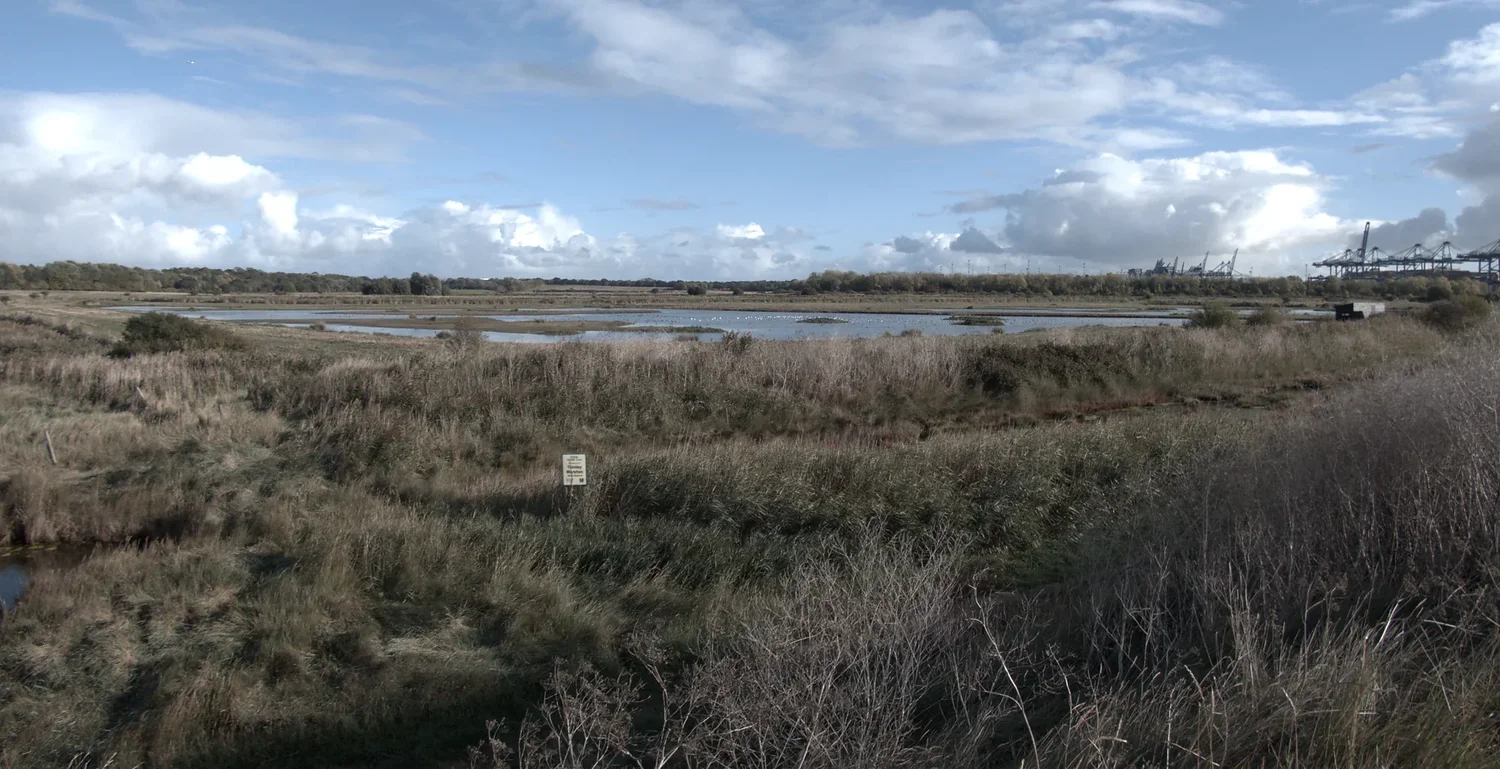
Trimley Marshes is among the best wetland birdwatching reserves in East Anglia. Its hides look out over freshwater lagoons, a reservoir, reedbeds and wet grazing marsh, while the raised bank opens onto the tidal Orwell. In one outing, you can watch Avocets and godwits on the pools, then turn to waders feeding on the estuary mud.
On my October visit, the reservoir was quiet, but the smaller pools held godwits, snipe and Avocets. As the tide rose, the river changed and the hides remained productive. Each pool gave me something different to watch.
The walk from Cordy's Lane
I would allow at least four hours for a visit, including around 90 minutes to walk from the car park and back. Three hours would leave little time to explore the hides. Plan for the approach, and you can give the reserve the attention it deserves.
The free car park is on Cordy's Lane at Trimley St Mary, rather than beside the hides. Follow the broad track for roughly half a mile (0.8 km) to a signed junction, then take the right-hand track towards the reserve. After about another half-mile (0.8 km), you reach the reserve gate and a viewing platform: roughly one mile (1.6 km) from the car park. The birdwatching route does not end at that gate. It bends down towards the port and round towards the Orwell before reaching Woodgate Hide and the visitor centre.
The Trimley St Mary parish route notes put the visitor-centre area about 1¼ miles (2 km) beyond the junction, or around 1¾ miles (2.8 km) one way from the car park. These are approximate guide distances, not a surveyed track. Suffolk Wildlife Trust advises allowing about 45 minutes for the approach; allow longer if you stop to watch birds on the way. Use the Trust's reserve information and trail map for directions, rather than relying on a pin placed in the middle of the wetland.
Walking distances from Cordy's Lane car park, one way: reserve gate and viewing platform about 1.6 km; visitor centre about 2.8 km; Longhurst Hide about 3.0 km; Cobb Hide about 3.2 km; Benson Hide about 3.4 km. These figures follow the parish route notes and are approximate.
For hide positions, open the official trail map. The Trust also has a longer circular walk map and directions.
The approach is mostly level, but it is long. The Trust describes a stone-surfaced bridleway that can have significantly damp sections after rain or in winter. Bring water and something to eat if you intend to spend time in several hides. The reserve is open at all times. The Trust says the visitor centre opens most Wednesdays and at weekends. Toilets are available when the centre is open; check the latest arrangements before relying on them. When staffed, its sightings board can help direct your attention to what has been seen recently. Dogs must be kept on a lead. The ramp at the hide adjoining the centre is useful, but it does not make the long approach from the car park step-free; ask the Trust about vehicular access if that would affect your visit.
From the reservoir to the hides
Woodgate Hide is reached before the visitor centre and looks over the reservoir. It is a good first pause if open: scan the nearer water, then work across the more distant edges. The reservoir holds water year-round and helps supply the other wetland areas. Ducks can be spread across distant water. I had plenty to watch with binoculars elsewhere on the reserve, but would have appreciated a telescope for those longer views.
At the visitor centre, there is another hide. From here the lower track continues past Longhurst, Cobb and Benson hides, roughly 200, 400 and 600 metres beyond the centre, respectively, according to the parish route notes. The lower path gives the more straightforward route between hides. The raised bank beside it provides a wider view of the estuary and is more exposed to wind; take care if descending from the bank, as the slope can be steep and slippery when wet.
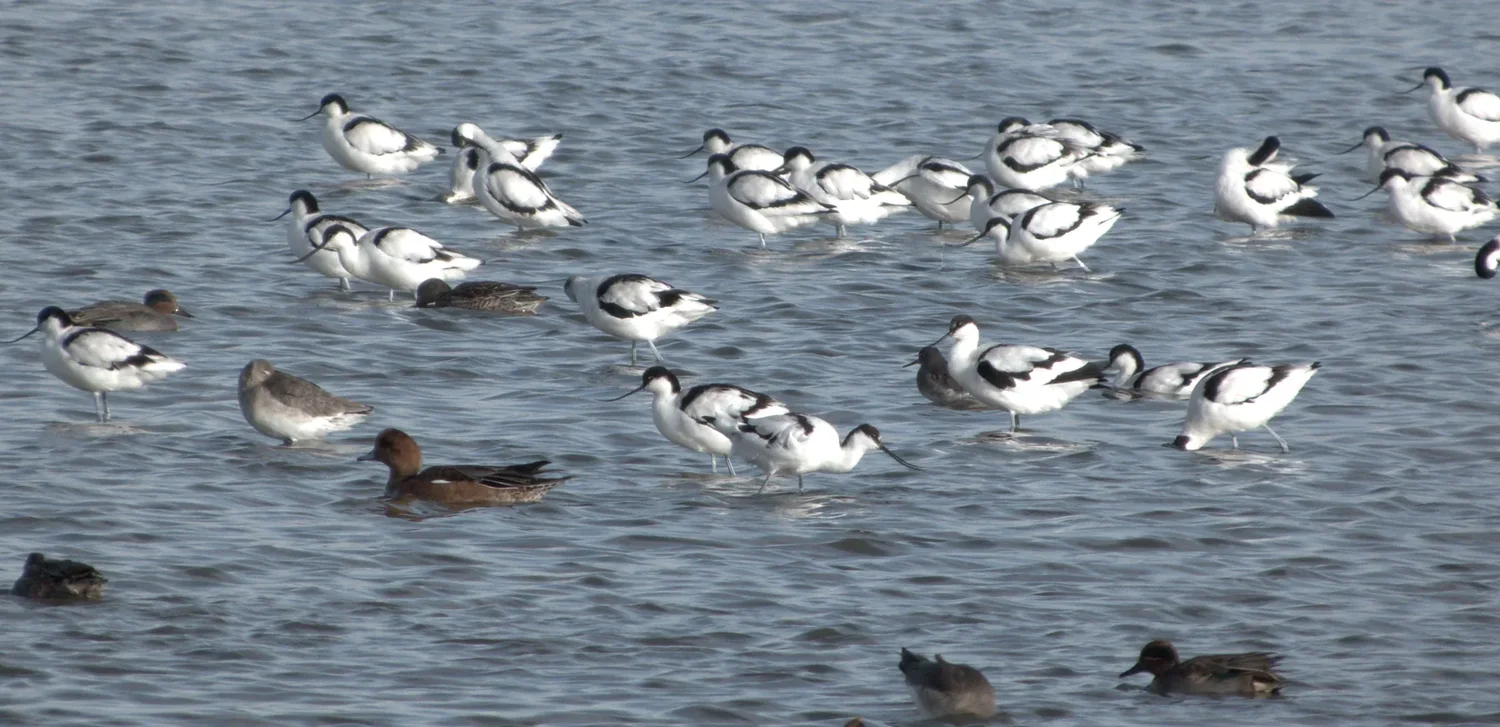
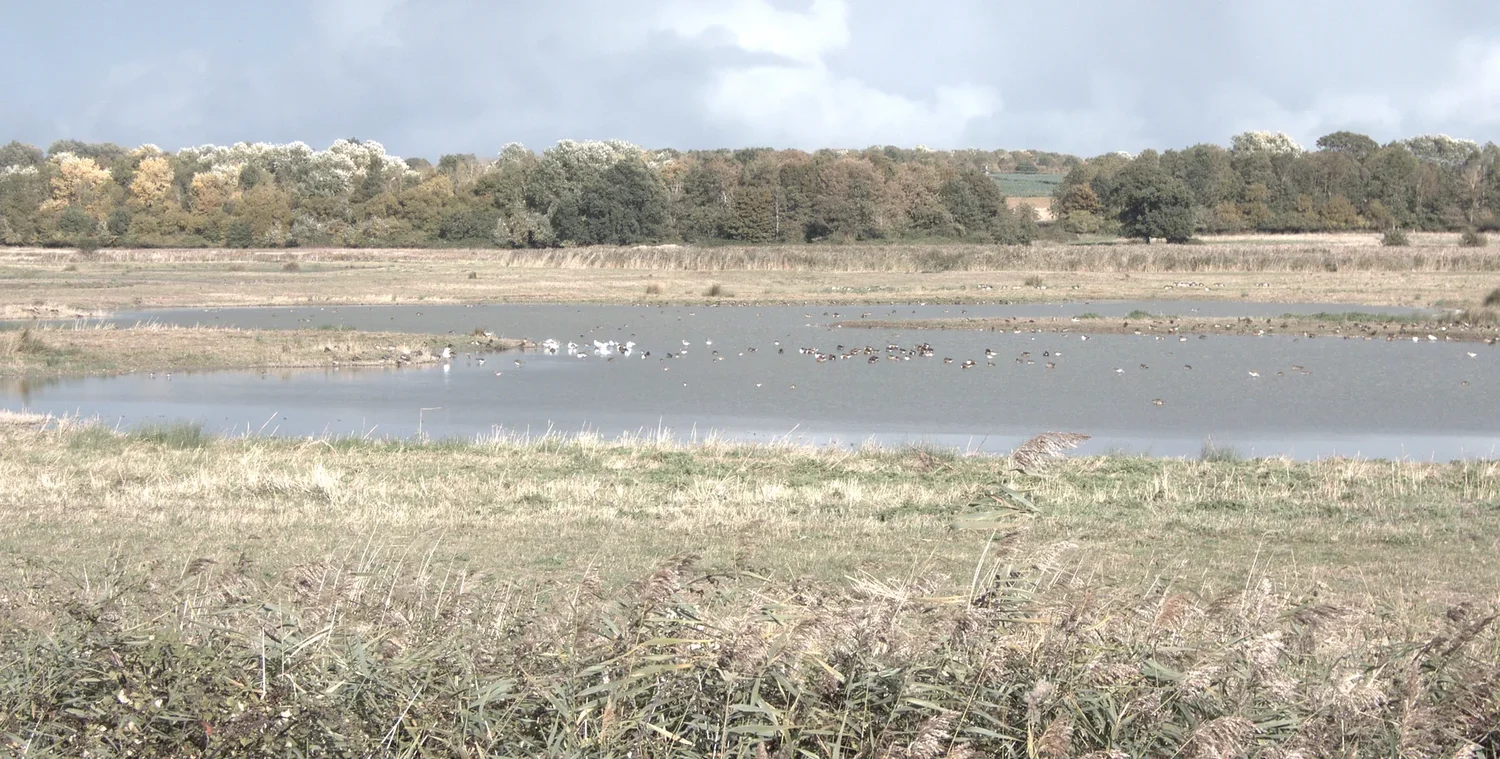
Do not treat the hides as interchangeable. Water depth, exposed mud and the position of birds change from pool to pool. On 17 October 2026, from one of the smaller-pool hides I watched roughly 200 Black-tailed Godwits, three Jack Snipe and two Common Snipe. A flock of about 30 Avocets was visible from another hide. Wigeon were present too, though I did not count them. The different pools needed their own time.
Two kinds of wetland in one visit
The lagoons and scrapes on the landward side of the raised bank are managed freshwater. Shallow edges and islands give waders places to feed and, in the breeding season, potential nesting habitat. The reservoir supplies water to the reedbed, lagoons and dykes through sluices, so levels depend on management as well as rainfall. A Suffolk Wildlife Trust volunteer told me that, during the severe drought of summer 2026, the scrapes had been allowed to dry to conserve the reservoir's supply. Grazing and mowing also keep parts of the marsh short for Wigeon and geese.
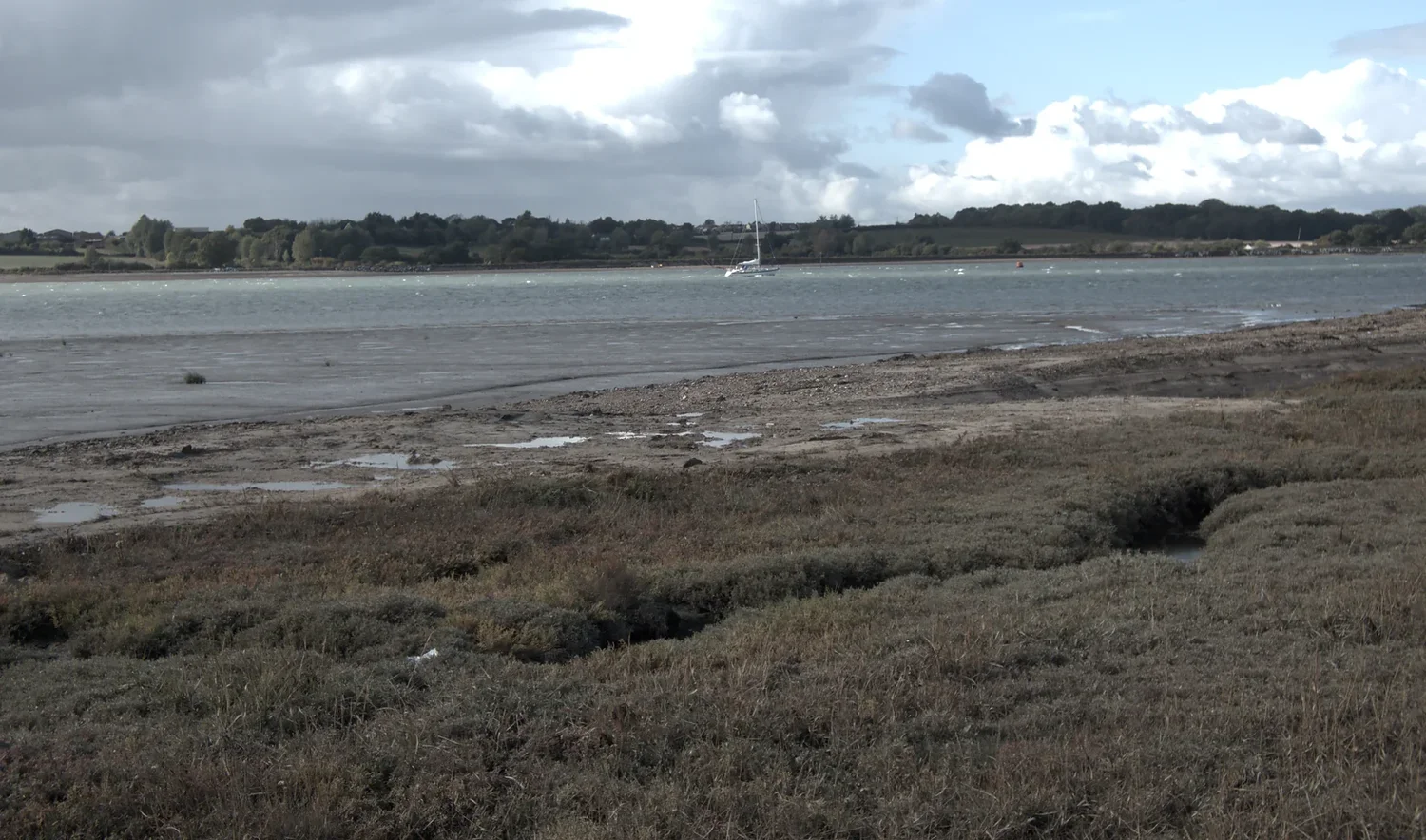
From the top of the bank, the tidal Orwell comes into view. A rising tide while mud is still exposed is a good time to watch it: feeding birds may come closer as the uncovered area shrinks. The tide was coming in during my visit. Once the mud was submerged, that stretch of river became quieter, but the hides still held birds. I watched Avocets move onto the freshwater pools and also found Dark-bellied Brent Geese there. I would check the river first while the mud remains, then turn to the hides as the water comes up. The sequence is a way to use the visit, not a guarantee that the birds will do the same thing every time.
When to visit for birds
Spring brings breeding activity on the lagoons, including Avocets, Redshanks and Lapwings in suitable years. Shallow margins can attract passage waders in spring and autumn. Autumn can bring large gatherings of Black-tailed Godwits and Wigeon, with Marsh Harriers over the wetland. Winter brings more wildfowl and Brent Geese, with the possibility of a Bittern in the reedbed. Volunteers I spoke to recommended spring, autumn and winter for birdwatching; they also said the reservoir could be better in summer. These are reasons to look carefully, not a promise of what will be present on a particular day. The Trust's reserve page gives the broader seasonal picture.
Combine Trimley with Landguard Point
Trimley Marshes and Landguard Point make a rewarding full day around Felixstowe. Landguard gives you exposed shingle, the sea and a coastal migration watchpoint; Trimley adds sheltered hides, freshwater pools and the tidal Orwell. I would start at Landguard if I wanted to look for morning passage, then give Trimley at least four hours including its walk from the car park. Check the tide and daylight before deciding the order, particularly in winter. You can visit both on the same day, but the approach to Trimley makes it worth starting early.
The longer circular walk
Visitors who want a longer outing can follow Suffolk Wildlife Trust's roughly six-mile circular route beyond the hides, towards Loompit Lake and back through the inland tracks. I have walked the circuit before, but for a bird-focused day I would prioritise the hides and return via the approach track. The walk in and out already takes a substantial share of the day.
Suffolk Wildlife Trust manages Trimley with help from volunteers, who also contribute to work on the habitat and hides. The visitor centre adds a welcome pause when staffed. For me, the variety of birds on the pools and the Orwell more than repays the walk. Check the Trust's latest visitor information before travelling, then give yourself time to watch both sides of the reserve.